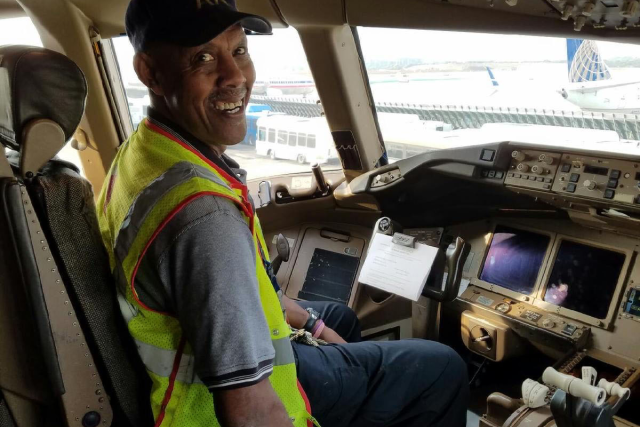
For more than 55 years, Herbert Williams has started his day before the sun is up, rising at 3:30 am, so he can be at LAX for his 5 am shift as an aviation maintenance technician technical crew chief at American Airlines.
Williams, 85, is the longest-serving employee in this role at the company. His job is physically demanding, requiring him to walk up steep entry stands and work platforms just to access the equipment and systems housed within the aircraft.
But Williams, who’s long entrusted UCLA Health with his health care, has no plans to retire.
After being diagnosed with congestive heart failure in 2021, he was monitored regularly by a UCLA Health cardiologist before ultimately undergoing a transcatheter aortic valve replacement (TAVR) at UCLA Health in October 2024.
With his heart again functioning normally, Williams has continued to do the job he loves.
Increased likelihood for heart disease
Despite a healthy lifestyle, including his active job, Williams knew he had an increased risk for heart disease based on his family history: His mother and two of his four siblings were diagnosed with congestive heart failure. Statistically, he was also at risk: According to the American Heart Association, close to 60% of Black adults in the United States have some form of cardiovascular disease, an umbrella category that includes heart failure, stroke and high blood pressure.
For Williams, who underwent successful prostate cancer treatment in his 60s, the first sign of underlying cardiovascular issues didn’t emerge until he was in his mid-70s. At that point, he was diagnosed with high blood pressure and was prescribed a diuretic, commonly used to help treat the condition because it prompts excretion of excess water and salt, which in turn helps increase blood flow.
Williams remained on the diuretic until January 2020, when he stumbled and fell at work. At that point, he was diagnosed with low blood pressure and with dehydration, leading his doctor to discontinue the diuretic.
Over the next year, Williams began noticing he was short of breath – something he’d never experienced before. “It was happening just walking from the parking lot to the bus stop (the shuttle stop for American Airlines’ LAX workers), which isn’t that far,” he said.
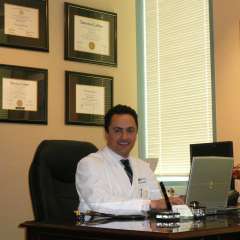
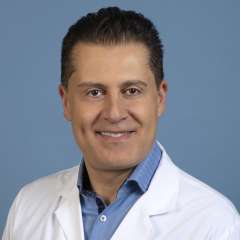
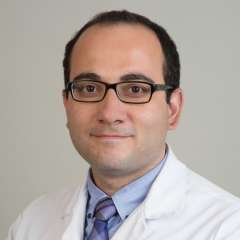
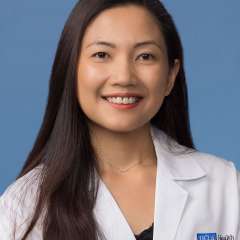
He made another appointment with Afshin Veiseh, MD, his primary care provider at UCLA Health, and was immediately referred to Kamran Shamsa, MD, a cardiologist with UCLA Health, given that shortness of breath is a common symptom of underlying heart issues.
When it appeared that Williams wouldn’t be able to get an appointment for several weeks, his doctor called Dr. Shamsa’s office so Williams could be seen right away.
After examining Williams, Dr. Shamsa sent him directly to the emergency department.
He was eventually admitted to Ronald Reagan UCLA Medical Center for what ended up being a five-day stay. He was diagnosed with congestive heart failure, which in turn was causing the build-up of excess fluids as his body compensated for reduced blood flow.
“The water I was retaining was making it hard to breathe,” Williams said. “Once they got the water out, I was breathing a lot better. I didn’t know it at the time, but the doctor said I probably wouldn't have made it from UCLA back home – I probably would have had a heart attack before I got there.”
Watchful waiting
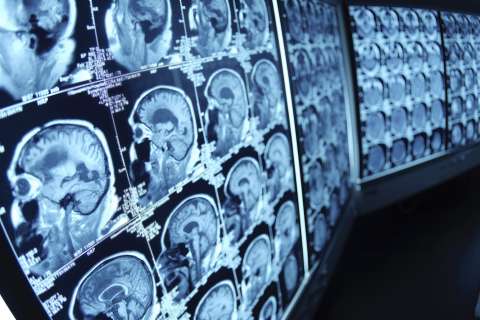
While he was hospitalized, Williams underwent an echocardiogram/ultrasound of the heart, which revealed that one of the valves wasn’t opening fully. He was diagnosed with severe aortic stenosis, a condition in which the valve from the left ventricle of his heart to the aorta had constricted severely, greatly reducing blood flow.
Aortic stenosis affects more than 13% of US adults who are 75 or older, according to the American Heart Association; as it progresses, it places increased strain on the heart, even in patients without symptoms.
“When we really start worrying about the valve is when the narrowing is severe, plus people have symptoms,” said Olcay Aksoy, MD, an interventional cardiologist who directs the TAVR program at UCLA Health. Those symptoms include shortness of breath, swelling, chest pain, dizziness or even passing out, he said. Some patients may not have symptoms but may have a heart murmur that’s detected by a doctor.
Once diagnosed with aortic stenosis, patients are typically monitored by their primary physician or cardiologist to determine when the situation has progressed to the point where replacement of the valve is warranted, Dr. Aksoy said.
The procedure is minimally invasive compared to open-heart surgery but still involves sedation and a one-to-two-day hospital stay. “It’s still a major procedure,” Aksoy noted.
A new valve
Dr. Shamsa saw Williams every few months from 2021 to 2024 to monitor his heart. By mid-2024, Williams’ heart-valve issue had progressed to the point that he needed the TAVR procedure.
Williams’ TAVR was performed by Dr. Aksoy, who threaded a catheter from Williams’ femoral artery, in his groin, up to his heart to replace the damaged valve.
The majority of the time, the procedure is done through the groin, Dr. Aksoy explained, but if pre-operative imaging shows there are blockages or other issues with the blood vessels in the leg, the procedure can be done via other access sites including from the neck or the shoulder.
“If the valve replacement is done through the groin, you go home within a day or two, and then you can go back to your life in a few days,” Dr. Aksoy said.
For someone with a desk job, they may be able to return to work after just a day or two, but it takes a month or so until patients are back to previous activity levels with no restrictions, he said.
Since the TAVR procedure was approved by the Food and Drug Administration in 2011, “it’s made a big difference in the quality of people’s lives,” Dr. Aksoy said. “You don’t have to get your chest opened up, and you can recover very quickly and go back to your life.”
The replacement valves typically last about 10 years, Dr. Aksoy said.
While Williams was at Ronald Reagan UCLA Medical Center, Maria Gultom, a cardiology nurse practitioner, “took care of him and treated him like he was her father,” Williams’ daughter, Sharnell Blevins, said. He felt well enough to go home after just a day, then spent a week at home recovering.
Back at work
In Williams’ case, he went back to work after just one week. “I was stubborn,” he acknowledged.
Once he got there, though, he felt faint and returned home, ultimately waiting another week to return.
Williams is now back to his old schedule. “I go to work five days a week and I work until 1:30 pm, then I’m back home doing things around the house, cutting the grass, messing with the cars or something like that. Everyone tells me I should slow down, but I just have to be doing something.”
Williams, who joined American Airlines in 1969, currently serves as a tech crew chief. “We’re the troubleshooting arm of maintenance,” he explained.
“One of the people who works with him said that when they call him in, he can fix the problem faster than anybody,” Blevins said.
Williams is a recipient of the Charles Taylor Master Mechanic Award, given by the Federal Aviation Administration to honor senior mechanics who have at least 50 years’ experience in civil or military maintenance. Williams received the award in 2015, based on his combined experience at American Airlines, and at McDonnell Douglas and in the U.S. Air Force before that.
Williams continues to have regular echocardiograms to monitor his heart functioning and to be seen by his new primary care provider at UCLA Health, Joel Thomas, MD, and by Dr. Shamsa, his cardiologist. He also will soon see Dr. Aksoy for his one-year follow-up.
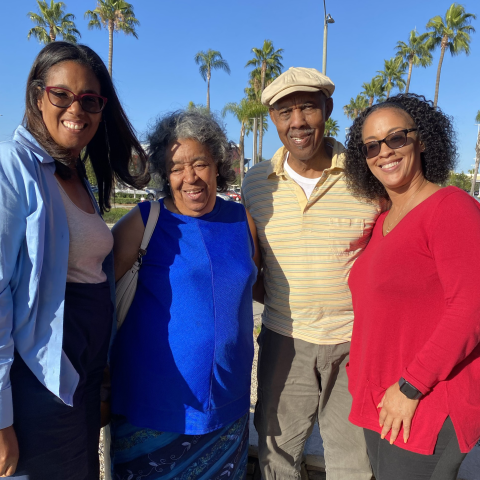
“I think I had a good team looking after me,” Williams said, “and my family is right on top of it, too,” he said, referring to his two daughters and his wife, Pamela.
“He trusts UCLA doctors and the way they work with one another,” Blevins said, noting that her father’s urologist, Karim Chamie, MD, is also part of UCLA Health.
“He’s a troubleshooter, so he constantly wants to know what the doctors are saying, so he can be part of his health care, and he finds doctors who work together for his health,” Blevins said. “He made a conscious effort a couple of years ago to make sure that everybody he works with is associated with UCLA, and he’s also a great advocate for himself.”