
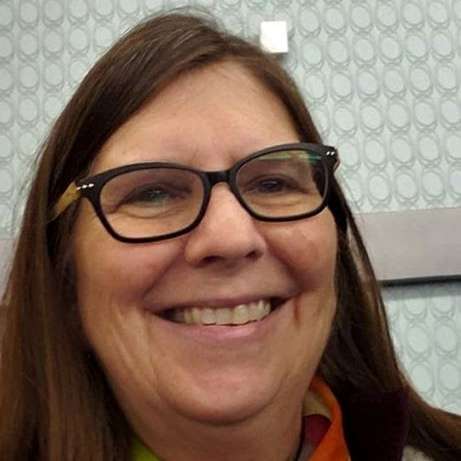
Meet Judy Chiasson
A Win-Win Situation
By Judy Chiasson, June 18, 2019
Some days are seared into our memories. February 11, 2019 was a postcard-sunny California day when I received the call from UCLA – I had been approved. I was going to donate my kidney to a stranger. I let out a heavy sigh and drove to the gym. I needed to swim. The rhythmic stroke, stroke, breathe soothed my mind as the enormity of that call sank in. Careful what you ask for.
The idea of donating had germinated slowly. I was first inspired by a dear friend who donated to someone she knew. Then I read the touching stories of kidney donors and recipients meeting for the first time. I scoured the kidney donation sites many times before I applied. UCLA’s advance donor program won me over. I love a good two-for-one deal. The advance donor program allows a donor to designate up to five family members for priority consideration should any one of them ever need a kidney. That meant that I could name my brother-in-law, who had inherited polycystic kidney disease (PKD). He’s in excellent health now, but twelve people die every day waiting for a kidney. Someone will get my healthy kidney today; Gary will get a promissory note for one free kidney if he needs it. Win-win. I was in.
The screening process for kidney donors is impressively comprehensive. Dr. Anjay Rastogi and the UCLA medical team is especially prudent; only a healthy few are ultimately approved. I was thoroughly supported throughout the exhaustive process. The medical team reviewed every test to ensure that I was healthy, well-informed, and comfortable enough to continue the process. And, if I were to drop out, I’d at least have had the best physical exam of my life. Learning just how healthy I am at age 65 was an unexpected bonus.
I didn’t tell a soul about my plan until after I had received the call. I didn’t want my friends or family to go through the inevitable roller coaster of feelings unnecessarily if I wasn’t approved or changed my mind. One daughter thought it was pretty cool; the other summarily forbade me to donate. My mother cried. But the most poignant conversation was with my sister Janet and Gary, my brother in law. They wanted to understand why. My words rang shallow. Why not? They were keenly aware of the problems with kidney disease but were worried about me. I was committed to going forward.
Donations to strangers are rare. There were about 7400 living kidney donations in 2019. Only three percent were non-direct (stranger) donations. So what makes that three percent of donors unique? Turns out, there’s a physiological reason. The amygdala is the part of the brain that is important for producing empathetic responses. Researcher Abigail Marsh found that altruistic donors had increased gray matter in that area. My enlarged amygdala hard-wired me for this.
So on June 18, 2019, the my sister and I drove to UCLA. My family uses humor to manage stress and we laughed together until they wheeled me away. The wonderful thing about anesthesia is that you miss the whole thing. I was told that the surgery went well. In the recovery room the nurse asked if I knew where I was. Through my stupor I quipped, “USC” (their rival). I heard her laugh. The doctors, nurses, and social workers were most attentive, kind and informative. I received superb care. At home, Janet was my rock. She managed my meals, visitors, and hundreds of texts from well-wishers. I’ve always been close with both Janet and Gary, but our bond has deepened since this experience.
My recipient, it turned out, was in the operating room next to mine. The next day we had the opportunity to meet her and her family. Susan’s husband, Frank, had donated his kidney to someone in Texas so Susan could be eligible to receive my kidney. That’s how it worked for them. I hope that’s how it will work for Gary someday. There are no words adequate to describe the feelings we had when we met. Susan and I were once strangers, and now there we were, our lives intertwined forever. We cried and embraced, each of us profoundly changed in that moment.
It’s been two years. I feel no effects of having just one kidney. Some of the details of that time are fading, but I will always remember the phone call, and the stunned silence when I told my family, the kindness of the UCLA medical staff, but, most of all, meeting Susan.