
UCLA Howard and Irene Levine Family Center for Movement Disorders
UCLA scientists are conducting a vast array of research investigating the causes of movement disorders such as Parkinson’s and Huntington’s disease and to develop new therapies. Researchers in the Movement Disorders Program are conducting basic science, translational and clinical studies often in collaboration with other investigators in the UCLA community.
Basic science research
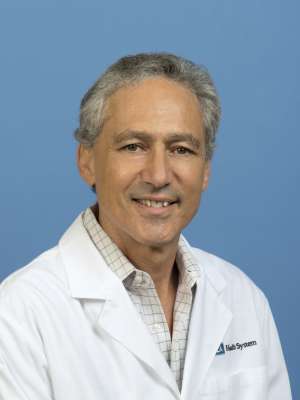
Dr. Jeff Bronstein directs a basic science laboratory that investigates the causes of Parkinson’s disease (PD) at a molecular level using novel zebrafish and cellular models. He is particularly interested in environmental causes of PD and collaborates with Dr. Beate Ritz, who is an epidemiologist, to study both the genetic and environmental risk factors in a large cohort of PD subjects that can be further investigated in the lab. Dr. Bronstein’s lab also studies potential disease modifying agents.
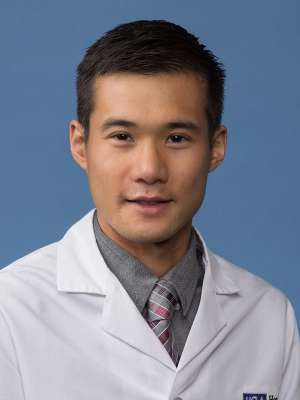
Dr. Timothy S. Chang's research laboratory uses computational approaches to identify genes that may increase the risk of neurodegenerative diseases and factors that may affect disease course. He is actively involved in clinical trials for movement disorder patients at UCLA.
Dr. Carlos Portera-Cailliau’s lab utilizes advanced microscopic techniques such as in vivo 2-photon imaging to study cortical circuitry and neuronal structure in development and disease such as PD and Fragile X. His lab is highly accomplished having published in top journals and received extensive funding from the National Institutes of Health, Department of Defense, and from several foundations. Please see porteralab.neurology.ucla.edu for details.
Dr. Chao Peng's lab focuses on the molecular and cellular mechanisms of pathological alpha-synuclein and tau related neurodegenerative diseases such as Parkinson's disease, Alzheimer's disease and multiple system atrophy. They develop cutting edge disease models and apply powerful genetic, multi-omics, structural and high through-put screen methods to investigate a wide range of topics related to the development and progression of this group of diseases. They are particularly interested in the transmission and conformational diversity of pathological proteins in the central nervous system and the role of neuron-glial interactions in this process. They also work together with industrial and academic collaborators to develop novel therapies for these diseases.
Dr. William Zeiger investigates how neurological diseases such as stroke and Parkinson disease cause dysfunction of cells and circuits in the brain. His lab utilizes mouse models, multi-modal in vivo imaging techniques, circuit manipulations, and custom behavior assays, with a goal of discovering therapeutics targeted at improving brain function to alleviate symptoms of neurologic disease. Please see https://zeigerlab.dgsom.ucla.edu/ for more information.
Dr. Katy Cross's lab investigates human brain circuit abnormalities underlying movement and gait impairment in Parkinson's disease and other movement disorders. They use virtual reality, detailed behavioral and kinematic measurement, and neural recordings to discover biomarkers that will guide the development of novel and personalized treatments. They use a variety of techniques including motion capture, functional MRI, electroencephalography (EEG), deep brain stimulation (DBS), and transcranial magnetic stimulation (TMS). https://crosslab.dgsom.ucla.edu/
Dr. Kimberly Paul is an epidemiologist who studies large data sets from disease populations to determine genetic and environmental factors that alters risk of disease with an emphasis on PD. She uses not only traditional genetic approaches but also links them to metabolomic analysis to further our knowledge at a molecular level in patients. Dr. Paul also works closely with Drs. Ritz and Bronstein evaluating the role of the microbiome in causing PD and in progression of the disease.
Health Services Research
Drs. Adys Mendizabal and Jennifer Adrissi are studying racial and ethnic disparities in movement disorders and dementia. Dr. Mendizabal’s current research looks at racial and ethnic disparities in Huntington’s Disease (HD), a rare progressive neurogenetic condition. She’s also developing projects improving sociodemographic data collection in HD, with the goal of understanding how minoritized groups with HD access specialized care, and with the goal to ensure equitable access to specialized care for HD and other neurological disorders. Dr. Adrissi is working on improving the lack of representation of black participants in Parkinson's disease clinical trials. She is currently creating a quantitative assessment tool to be used by Parkinson's disease researchers to assess and improve their recruitment and study design to increase inclusivity and accessibility for Black participants, using a community-centered approach.
Dr. Indu Subramanian has a strong interest in integrative medicine with a special interest in Yoga and Mindfulness. Her main research interest is on the effects of loneliness, stigma and mental health issues in people living with PD. She is also interested in disparities in the care of women with PD and is studying mindfulness at the VA through Insight LA.
Clinical and translational research and clinical trials
Dr. Danielle Thordarson is an Assistant Professor of Neurology at UCLA whose work centers on clinical trials and research in Parkinson’s disease and related synucleinopathies. She has served as a principal investigator and sub-investigator on multiple clinical trials evaluating symptomatic and potential disease-modifying therapies, and is actively involved in research exploring how environmental factors, including pesticide exposure, influence Parkinson’s disease. Through her roles at both UCLA’s main campus and a community-based clinic outside Los Angeles, she works to bring clinical trial opportunities and specialized movement disorders care to patients in rural and underserved communities, with the goal of making research participation and advanced therapies more accessible to all.
Several members of the Movement Disorders Program faculty perform clinical research. All studies are performed in the Neurology Department’s dedicated Center for Neurotherapeutics and the Chen Center for Translational Research for Parkinson’s disease and Related Disorders. A variety of studies are currently underway for Parkinson’s disease, Huntington’s disease, PSP and Wilson’s disease.
Some of these studies are investigator initiated while others are industry sponsored. These studies include novel therapies to treat these disorders, devices to better determine the needs of our patients, and magnetic and electrical stimulation studies. Funding comes from a variety of sources including the NIH, foundations and industry.
For more information on clinical trials, please contact Diane Lim at 310-206-3356 or email [email protected]
List of Clinical Trials:
Active/Recruiting Movement Disorders Clinical Trials at UCLA:
PARAISO: A Study to Evaluate the Efficacy and Safety of Intravenous (IV) Prasinezumab in Participants With Early-Stage Parkinson's Disease
The purpose of this study is to evaluate the efficacy, safety, and pharmacokinetics (PK) of prasinezumab compared with placebo in participants with early-stage Parkinson's disease (PD) on stable symptomatic monotherapy with levodopa.
Phase: 3
Gender: All
Age Group: 50 – 85 years
Contact: Diane Lim [email protected]; Alexandra Shurlock [email protected]
Investigator: Danielle Thordarson, MD
exPDdite: A Study to Investigate the Efficacy and Safety of Bemdaneprocel in Adults Who Have Parkinson's Disease
Study BRT-DA01-301 is a Phase 3 multicenter, randomized, sham surgery-controlled, double-blind study to assess efficacy and safety of bemdaneprocel in approximately 102 adults with Parkinson's Disease (PD).
Phase: Phase III
Primary Purpose: Treatment
Gender: All
Age Group: 45 – 75 years
Contact: Diane Lim [email protected]; Alexandra Shurlock [email protected]
Investigator: Jeff M. Bronstein, MD, PhD
Neulark: A Phase 2 Study and Open-Label Extension of NEU-411 in Companion Diagnostic-Positive Participants With Early Parkinson's Disease
The goal of this Phase 2 clinical trial is to investigate the efficacy and safety of NEU-411 in men and women aged 40-80 years with early Parkinson's Disease (PD) who have predicted elevations in the activity of the "leucine-rich repeat kinase 2" ("LRRK2" for short) pathway based on their genetic profile. A DNA test will be used to identify the "LRRK2-driven" population with predicted elevation in the LRRK2 pathway.
Phase: Phase II
Primary Purpose: Treatment
Gender: All
Age Group: 40 – 80 years
Contact: Diane Lim [email protected]; Alexandra Shurlock [email protected]
Investigator: Jeff M. Bronstein, MD, PhD
Parkinson's Foundation PD GENEration Genetic Registry
This study aims to create a genetic data and sample repository for Parkinson’s Disease (PD) for future research use. Clinical genetic testing and counseling is provided for people with Parkinson’s disease. Genetic testing targets seven PD genes: GBA, LRRK2, SNCA, PRKN, PINK1, PARK7, and VPS35. Participation involves only one visit to UCLA and a meeting with a genetic counselor via Zoom or telephone.
Phase: Phase N/A
Primary Purpose: Observational
Gender: All
Age Group: 18 years and up
Contact: Diane Lim [email protected]; Alexandra Shurlock [email protected]
Investigator: Jeff M. Bronstein, MD, PhD
Neural Mechanisms of Freezing of Gait (FOG): A Multi-modal Approach Using Virtual Reality and Brain Electrical Recordings
This study aims to improve the understanding of freezing of gait through brain and motion recordings. Patients with Medtronic Percept deep brain stimulation (DBS) implants will perform walking tasks in our motion capture gait lab during 3 visits to UCLA.
Phase: N/A
Gender: All
Age group: Adults
Contact: Erin Obadia [email protected]
Investigator: Katy Cross, MD, PhD
Optimizing Visual Cues for Gait in Parkinson's Disease
The goal of this study is to determine optimal strategies for visual cueing in patients with Parkinson’s disease. In a single study visit to UCLA, patients with Parkinson’s disease (PD) will complete walking tasks while wearing shoe-mounted laser devices and eye-tracking glasses.
Phase: N/A
Gender: All
Age group: Adults
Contact: Erin Obadia [email protected]
Investigator: Katy Cross, MD, PhD
A Phase 1/2/3 Study of UX701 Gene Therapy in Adults With Wilson Disease
The primary objectives of this study are to evaluate the safety of single IV doses of UX701 in patients with Wilson disease, to select the UX701 dose with the best benefit/risk profile based on the totality of safety and efficacy data and to evaluate the effect of UX701 on copper regulation.
Phase: Phase III
Primary Purpose: Treatment
Gender: All
Age Group: Adults
Contact: Diane Lim [email protected]; Alexandra Shurlock [email protected]
Investigator: Jeff M. Bronstein, MD, PhD
Prescreening Study to Identify Potential Wilson Disease Participants for Gene-Editing Clinical Trial
The aim of this study is to inform and improve future clinical trials in Wilson Disease (WD) by better understanding how patients with WD are living with and managing the disease, and by identifying key factors that shape their decisions to participate in clinical research.
Phase: Phase N/A
Primary Purpose: Observational
Gender: All
Age Group: 18 years and up
Contact: Diane Lim [email protected]; Alexandra Shurlock [email protected]
Investigator: Jeff M. Bronstein, MD, PhD
TOPAS-MSA: A Trial to Test if TEV-56286 is Effective for Treatment of Participants With Multiple System Atrophy
The primary objective of the study is to evaluate the efficacy of TEV-56286 administered orally for the treatment of adult participants with Multiple System Atrophy (MSA).
A secondary objective of the study is to evaluate specific efficacy parameters of TEV-56286.
Another secondary objective is to evaluate the safety and tolerability of TEV-56286.
The planned study period per participant is 56 weeks including a screening period (up to 4 weeks), a 48-week double-blind treatment period, and a follow-up visit (approximately 4 weeks after the end of the double-blind treatment period). The study duration will be approximately 27 months.
Phase: Phase II
Primary Purpose: Treatment
Gender: All
Age Group: Adults
Contact: Dillan Hayward Hayward [email protected]; Westley Ulit [email protected]
Investigator: Susan Perlman, MD
A Phase 2 Study of YA-101 in Patients With Multiple System Atrophy
This is a Phase 2, double-blind, placebo-controlled, multi-center, Phase II, dose escalation study to evaluate the safety, tolerability, pharmacokinetics and efficacy of Ya-101 in subjects with multiple system atrophy.
Phase: Phase II
Primary Purpose: Treatment
Gender: All
Age Group: Adults
Contact: Dillan Hayward Hayward [email protected]; Westley Ulit [email protected]
Investigator: Susan Perlman, MD
For information, please contact Diane Lim at: 310-206-3356 or email [email protected]
Fellowship
Director
Faculty









Associate Faculty



Giving: Your gift to the UCLA Movement Disorders Program makes a difference.