Neurophysiology
Find Your Care
Our neurology team consistently ranks among the best in the country. To find out more about our neurology services, call 310-794-1195.
Meet our team
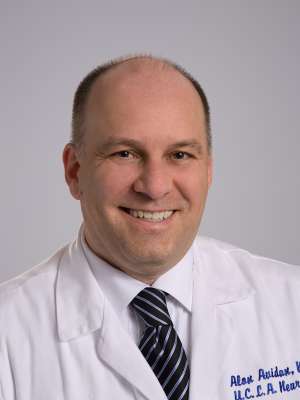
Director

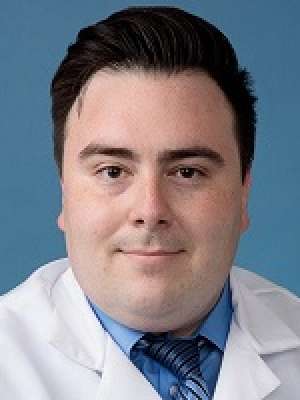
Faculty & Staff Providers





Associated Programs
Cerebral Blood Flow
Phone: 310-825-0177
Provides inpatient and outpatient cerebral blood flow studies for patients with acute stroke, subarachnoid hemorrhage, arteriovenous malformations, or traumatic brain injury: 1. Transcranial Doppler (TCD): Non-invasive assessment of blood flow velocity in the basal cerebral arteries. 2. Xenon-133 assessment of cerebral perfusion.

Electroencephalography (EEG)
Phone: 310-825-0177
Provides specialized diagnostic testing of epilepsy and focal brain disturbances, space-occupying lesions, and vascular disorders. 1. Ambulatory EEG monitoring (awake and asleep) 2. Computer EEG analysis (brain mapping) 3. Specialized intensive care unit (ICU) and operating room (OR) monitoring
Electromyography (EMG) and nerve conduction studies (NCS)
Phone: 310-825-7266
Provides needle EMG tests of motor and sensory nerve conduction for patients with disorders of muscle and peripheral nerve. Single fiber EMG for special cases.

Electronystagmography (ENG)
Phone: 310-825-5910
Provides computer assisted electronystagmography and rotational testing to evaluate pathologic nystagmus, vestibulo-ocular reflex function, and visual ocular control in patients with dizziness and balance problems.
Evoked potentials (EP)
Phone: 310-825-0177
Evoked Potentials are utilized to assess the integrity and function of specific neural pathways in response to a variety of neurological symptoms. Somatosensory Evoked Potentials (SSEP) are routinely employed to diagnose and assess the severity of conditions affecting the sensory pathways, such as Multiple Sclerosis (MS), where they can reveal subclinical lesions in the spinal cord, and various forms of peripheral neuropathy and myelopathy (spinal cord disease). Motor Evoked Potentials (MEP) are often used to evaluate motor neuron diseases, motor cortex lesions, and motor myelopathies. Visual Evoked Potentials (VEP) are a gold standard for detecting optic neuritis (inflammation of the optic nerve, frequently a presenting symptom of MS), assessing tumors affecting the visual pathway, and diagnosing other optic nerve disorders. Finally, Brainstem Auditory Evoked Potentials (BAEPs) are essential in assessing the cause of certain types of hearing loss, identifying acoustic neuromas (tumors on the auditory nerve), and localizing lesions within the brainstem.
Neuromonitoring
Phone: 310-825-0177
Neuromonitoring is a medical technique used primarily during surgical procedures to continuously assess the functional integrity of a patient's nervous system. It utilizes various electrophysiological methods, such as evoked potentials and electromyography, to collect real-time data on nerve and brain activity. The main purpose is to alert surgeons immediately to any potential nerve damage, allowing for prompt corrective action to minimize or prevent permanent neurological injury.
Pediatric Epilepsy Program
Phone: 310-825-6196
Provides outpatient consultation and specialty programs that provide comprehensive evaluation and management of neurologic disorders in infants and children under the age of 18. Its faculty members include specialists in developmental and metabolic storage diseases, epileptology, and electroencephalography.

Seizure Disorder Center
Phone: 310-825-5745
Specializes in the diagnosis and treatment of patients with newly diagnosed drug resistant seizure disorders, including genetic epilepsies. The center also specializes in surgery of epilepsies. Programs for VNS (Vagal Nerve Stimulation), trigeminal nerve stimulation, and deep brain stimulation are also available.

Sleep Laboratory
Phone: 310-267-5337
Provides testing for sleep apnea, narcolepsy, periodic leg movements, nocturnal seizures, circadian rhythm disturbances, abnormal behaviors during sleep (parasomnias), and infant evaluations for sleep related disordered breathing.