Reflections on the China Rotation By Jerry Lee, MD, and Nilson Wu, MD
Reflections on the China Rotation
By Jerry Lee, MD, and Nilson Wu, MD
Dr. Jerry Lee:
In January 2026, I had the great privilege of participating in a month-long international elective in anesthesiology at the Second Affiliated Hospital of Zhejiang University School of Medicine (SAHZU) in Hangzhou, China. Although I had heard nothing but great things from previous residents who had participated in the rotation, I didn’t really know what to expect, and since this was my first solo travel experience in an unfamiliar country, I was a bit nervous going in.
Fortunately, I didn’t need to worry. The anesthesiology department at SAHZU was so gracious in welcoming me and making me feel at home. I was paired with a wonderful mentor, Dr. Yu Shui, who showed me around the various subspecialties of anesthesiology practiced at SAHZU, including general, cardiac, regional, transplant, ICU, and PACU. Much like UCLA, SAHZU is an academic hospital with resident physicians, so each day we participated in morning report and discussed interesting cases and research articles.
The elective was very hands on. On my very first day, I participated in an intraoperative code and observed how an emergency was handled there (spoiler alert, it is very similar to UCLA). I was also able to fine tune my line placement, nerve block, and TEE skills.
It was fascinating to observe the standard workflow of a large hospital in a major Chinese city and see how it differs from ours. For example, regional nerve blocks, arterial lines, and central lines are done in a separate room (while awake) prior to going to the OR. General anesthesia is most often maintained with total intravenous anesthesia (TIVA), and patients are routinely extubated in the PACU instead of the OR. These practices reflect the efficiency necessary to keep up with a patient population that is much larger than ours.
I was particularly struck by the attention paid towards waste. In Hangzhou, many pieces of equipment used for procedures are metal-based and re-used after autoclaving, while at UCLA the same equipment is plastic and single-use. Such practices made me more conscientious of the ways we can reduce the environmental impact of our anesthetics.
Professionally, there was an excellent exchange of information. The residents and attendings were very interested in our education path to becoming an anesthesiologist, our research, and our daily life. After I gave a presentation on UCLA’s perioperative workflow, they even adopted our OR-to-ICU/PACU handoff checklist. Despite my subpar Chinese skills, we were able to understand and learn from each other. I learned about the history of the hospital and its evolution from a small clinic treating opium addiction in the mid-1800s to the academic behemoth it is today. This growth has paralleled China’s meteoric rise in the last several decades.
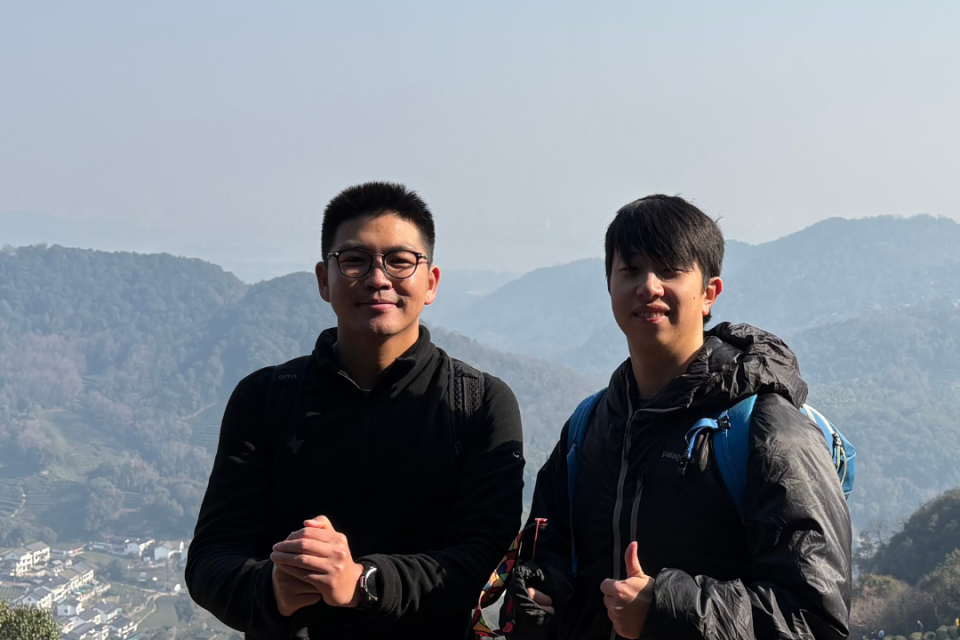
Relationally, I found my hosts to be extremely welcoming, humorous, and eager to share their experiences. We ate together, explored the beautiful scenery of Hangzhou, and even went hiking in the nearby mountains famous for its tea cultivation.
My experience in Hangzhou truly opened my eyes to China, a country that is frequently misunderstood through the Western lens, but I feel like I have only scratched its surface. Nonetheless, even in my short time there, I witnessed the strength, warmth, and humility of the Chinese people. I hope to visit again in the near future, and I am forever grateful to Dr. Victor Xia, Dr. Yu, and both the departments of anesthesiology at UCLA and SAHZU for providing this wonderful opportunity for cross-cultural exchange!
Dr. Nilson Wu:
The international rotation at The Second Affiliated Hospital of Zhejiang University (SAHZU) in Hangzhou, China, was one of my most formative and memorable experiences during residency. I wanted to see firsthand how anesthesia was practiced in a different country, especially one in which I could also practice speaking and understanding Mandarin, my mother tongue.
During my time at SAHZU, I was impressed by how streamlined and efficient the hospital system was. Most patients present to the pre-operative evaluation center for recommendations and clearance before surgery. On the day of surgery, there is a designated procedure room where patients who need arterial lines and/or central lines go to for line placement prior to arrival in the OR. Patients are extubated in the PACU to shorten OR time and accommodate the large volume of cases. PACU holds are rarely an issue, as they have ample staffing and overflow recovery rooms to use as needed. OR turnover time was consistently less than 30 minutes.
I was also surprised by how resourceful SAHZU was. They have re-useable sterile cloth drapes and gowns. 20-gauge angiocath IVs are used for arterial lines, and sterile saline is used instead of gel for ultrasound-guided procedures. For every OR case, the anesthesia team receives a box of just enough supplies for the case (e.g. one video laryngoscope, a set of syringes and monitors) so that there is minimal waste. Acute normovolemic hemodilution is performed much more routinely to save blood. These observations taught me to be more mindful of resource utilization when I returned to the U.S.
Throughout the month, my assigned anesthesiologist mentor, Dr. Yu Shui, patiently answered all my questions, oriented me to the hospital system, and gave me the flexibility to shape my educational experience. I wanted to improve my regional anesthesia skills and line placement, so he assigned me mostly to the Acute Pain Service and procedure room. I was also able to participate in thoracic, cardiac (including lung transplants), and non-OR anesthesia cases. I attended two simulation sessions, during which the case scenarios and discussion sessions were very similar to those at UCLA.
I also gave two oral presentations to the entire anesthesia department: one case report and one talk on the similarities and differences between SAHZU and UCLA. By the end of the rotation, my Mandarin improved significantly. I could proudly say that my final presentation was given mostly in Mandarin. (For context, my Mandarin is very elementary, and I knew zero anesthesia-related words prior to this rotation!)
Outside of the hospital, I enjoyed exploring the beautiful city of Hangzhou. Ordering food, using public transportation, and buying groceries was streamlined through the Alipay app. Most restaurants allowed payment via a QR code linked to the app that also translated the menu into English, so language limitation was never an issue. I spent time after work strolling around West Lake, admiring the pagodas, sipping their famous Longjing Tea, and trying the various cuisines around town that were delicious and affordable. On the weekends, I traveled to Shanghai and Suzhou, both of which were only a short high-speed train ride away.
Overall, my experience in China was unforgettable. I am grateful for all that I learned from SAHZU and am very appreciative of UCLA for granting me the privilege of participating in this wonderful program.
Reflections on the China Rotation 2026