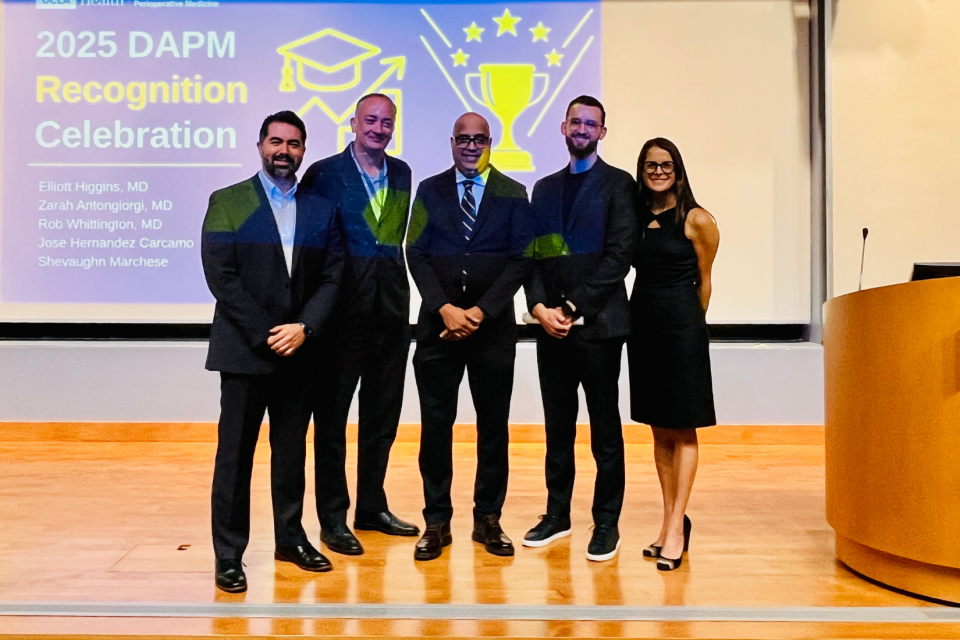
Reflections on the DAPM Recognition & Appreciation Event
Q&A with K. Elliott Higgins, MD
1. What inspired the ceremony and what made this inaugural event special for you all as event organizers?
Our department is pretty incredible and constantly doing amazing things. For us as organizers, the inspiration for this ceremony really came from seeing just how much of that great work happens quietly in the background and wanting to create a moment to pause, see it, and celebrate it together. Recognition is a key driver of professional fulfillment, and it’s important that we, as a department, deliberately and intentionally recognize the amazing work that happens here. It’s not just about acknowledgment for its own sake (though that is important). Formal recognition like this can help fuel inspiration, curiosity, connection, and community. When we think about cultures of well-being and what it takes to cultivate and sustain them, part of that work is coming together to celebrate each other, celebrate the excellence among us, feel inspired by one another, and notice the many opportunities that exist right here within our own walls.
As we were getting ready to put this inaugural event together, what really struck us was just how many accomplishments there were across our entire department—across all professional identities and so many different areas. It is really impressive. There were moments on our planning Zoom meetings when we would look at each other and say, “Wow, it’s unbelievable how much excellence there is in our department.” That sense of awe, of being surrounded by so much excellence and shining a light on it together, is what made this inaugural ceremony feel especially meaningful for us as organizers.
2. How does formal recognition of faculty and staff contributions strengthen our department's culture and sense of community?
Formal recognition is so important. The contributions that all of us make on a regular basis are what sustain the critical work we do as a department. Beyond that, when it comes to the meaning we derive from our work, acknowledgment, inspiration, and curiosity are some of the key ingredients for meaning, purpose, professional fulfillment, and how we come to see ourselves in our professional identities.
Formal recognition of accomplishments strengthens our culture because it helps cultivate pride in what we do and pride in each other. It helps cultivate inspiration and even a bit of awe, which can fuel curiosity and reinforce a sense of community where we want to support and learn from one another.
To me, this type of event is an essential part of a healthy culture of well-being, because this kind of acknowledgment can help strengthen the very fabric of our department and the way we work together as a team.
3. Can you describe the impact research has had on our department and the slide(s) you showed to visualize the vast reach our department has had in the field?
The productivity of our department in terms of research is exceptional. The slides we presented focused on grant funding, and while that’s an important part of research, it only captures a small portion of the full picture.
The amount of work that goes into a single grant is very hard to describe—not just the work of actually putting the grant together and making it competitive with clearly presented research aims, but also all of the years of preparation, mentorship, and effort that go into someone reaching the point where they can even obtain funding to pursue their research. It’s honestly incredible.
The scale at which our department does this, which we tried to show with just a glimpse into the most recent years, is nothing less than exceptional. We also got a glimpse into the mentorship within our department, which is similarly remarkable.
Those slides were a snapshot of how productive our department is across an immensely, honestly vast range of academic inquiry—everything from behavioral and organizational science to rigorous molecular-level inquiry. It’s impressive!
4. What feedback have you received from faculty and/or staff about what they learned about our department, how it felt to be recognized, and/or another reflection about the event?
The feedback we received was very positive. Department members commented that it was amazing to learn about all of the various accomplishments and activity happening in our department, and people shared that they felt inspired by the achievements of friends and colleagues all around them. I also heard from several people who said things like, “Wow, I had no idea this or that was happening,” or “I didn’t know XYZ was doing all this amazing research,” and I think the event helped broadcast the breadth and depth of excellence in this department.
The feedback that landed the most for me was how people felt a sense of pride in the department and a sense of inspiration from the example of others around them.
5. As we establish this as an annual event, what do you hope this ceremony will mean for future faculty and staff members and the legacy of DAPM?
As we establish this as an annual event, we hope this ceremony will inspire future members of the department in their work and help cultivate a culture of well-being.
In terms of legacy, if this event plays a part in helping to sustain the department’s excellence, in promoting it, and in cultivating a culture where we can do amazing things together, feel proud of each other, and be inspired by the examples of others, then I think that would be an amazing legacy.
Much like the Gratitude and Good Outcomes Grand Rounds, this event and this ceremony have the potential to play a part in all of that: cultivating a sense of inspiration in the daily work we do, cultivating some awe, and maybe, even for a moment, helping us feel like we are a smaller part of something much bigger than ourselves in a way that is healthy and that helps promote, in a virtuous way, the very excellence that we are celebrating.